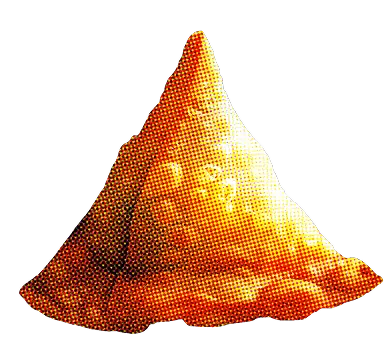
Indian street food is the food most of the UAE's largest community grew up on: vada pav, pani puri, pav bhaji, chaat, a cutting chai. In Dubai it has been sold for decades from small independent counters in Karama, Bur Dubai and Deira. What the Gulf has had very little of is a branded, franchised version that a landlord will put in a mall and an investor can open in a city they do not live in.
We run one. The Bhukkad Café was founded in Dubai in 2017 and has traded since January 2018. Seven outlets have opened since then and five trade today, in Dubai and Sharjah. This guide explains how the category works as a franchise, using our own published terms as the worked example, because they are the ones we can vouch for.
It covers who the customer is, the formats, the cost to open each one, the fees, the sites that suit the food and what to ask any franchisor before you sign. If you are reading from outside the UAE, the country guides for Saudi Arabia, Qatar, Kuwait, Oman and Bahrain cover the local rules.
Key takeaways
- The UAE has 4.36 million Indian residents, more than half of them in Dubai, and Dubai received 2.89 million visitors from South Asia in 2025.
- Independent operators took roughly 72% of UAE food-service sales in 2024, so branded chains are still the minority.
- The Bhukkad Café franchise comes in three formats: Express at AED 600,000 to 630,000, Café at about AED 1.05 million and Flagship at about AED 1.7 million, all-in.
- The fee is AED 110,000 per outlet, with a 7% royalty on gross sales, at least 2% spent on local marketing and up to 1% paid into a brand fund.
- Street food is harder to standardise than coffee, so judge a franchisor on its written recipes, its supply system and its training before you judge it on its brochure.
What an Indian street food franchise sells
Page 3The menu comes from the pavements and railway stations of Indian cities. Vada pav is Mumbai's potato fritter in a soft bun with dry garlic chutney. Pani puri is a crisp hollow shell filled with potato and spiced water, eaten in one bite. Pav bhaji is a buttered vegetable mash with toasted bread. Chaat is a family of sweet, sour and crunchy plates that began in Uttar Pradesh. Add kathi rolls from Kolkata, Indo-Chinese noodles and chilli chicken, bun maska from the Irani cafés of Mumbai, and tea.
The tea matters in the Gulf. Karak is the local version of Indian masala chai, strong and milky, and it arrived with South Asian migrants in the 1960s and 1970s according to The National. It is now drunk by every nationality here, which gives an Indian street-food café a daily product that sells from breakfast to midnight to people who have never ordered a vada pav.
Three things make the category suit a franchise. The ticket is small, so guests come often. Most of the menu is vegetarian (about 60% of ours) and all of it can be halal, so it fits the Gulf without changes. And the dishes are assembled to order from prepared parts, which means a trained crew can serve them without a chef on every shift.
Who eats it in the UAE and the Gulf
Page 4The first customer is the Indian resident. India's Consul General and Ambassador put the community at 4.36 million in the UAE, double the figure of a decade earlier, with more than half living in Dubai (Gulf News). The second is the visitor. Dubai received 19.59 million international overnight visitors in 2025, of whom 2.89 million came from South Asia and 2.99 million from the other GCC states, on Department of Economy and Tourism figures.
The third customer is everyone else, and this is the part investors miss. A café that serves karak, a cheese chilli toast and a plate of chaat at mall prices is competing for the same occasion as a coffee shop or a burger counter. In our own cafés the queue is mixed, and the menu is written so that a first-time guest can order without a glossary.
On the supply side the market is mostly unbranded. Euromonitor figures published by the US Department of Agriculture put UAE food-service sales at USD 17.8 billion in 2024, of which independent operators took USD 13.07 billion and chains USD 4.97 billion. In our part of the market, most of it is sold by single counters. Dubai Municipality counted 8,617 restaurants and 5,240 coffee shops and cafeterias in the same report.
Three formats and what each costs to open
Page 5We franchise three formats, and the table below sets them out. Each figure is the all-in cost to open in the UAE, franchise fee included: fit-out, kitchen, furniture, approvals, licences, the landlord's deposit and advance rent, visas, recruitment and working capital. They are management estimates as at October 2026, benchmarked to our own builds, and they move with the site, the size and the landlord's terms.
Express is the small one: a kiosk, a takeaway counter, a chai bar or a food truck of up to 500 sq ft, run by three or four people. Our outlet at Al Seef on the Dubai Creek is an Express. Café is the standard Bhukkad, 500 to 1,000 sq ft with a team of six to eight, and most of our outlets use it. Flagship is casual dining of 1,000 to 3,000 sq ft with room for a lounge or shisha, as at Dubai Festival Plaza, and it is priced site by site.
For comparison, published UAE benchmarks from uaefreezonefinder.com (August 2026) put a budget food franchise at AED 200,000 to 500,000 in total and a mid-market one at AED 500,000 to 2 million. Express sits just above the first band and Café in the middle of the second. The detail of every cost line for a Dubai café is in our guide to what a franchise costs in Dubai, and the three formats are compared in full in Express, Café or Flagship.
| Format | What it is | Size | Team | All-in cost to open |
|---|---|---|---|---|
| Express | Kiosk, takeaway counter, chai bar or food truck | Up to 500 sq ft | 3 to 4 | AED 600,000 to 630,000 |
| Café | Fast casual, sit-down or takeaway | 500 to 1,000 sq ft | 6 to 8 | About AED 1.05 million |
| Flagship | Casual dining with room for a lounge or shisha | 1,000 to 3,000 sq ft | 11 to 13 | About AED 1.7 million, priced site by site |
Fees: what you pay the franchisor
Page 6There are four numbers. The franchise fee is AED 110,000, paid once per outlet when you sign. The royalty is 7% of gross sales, paid monthly, where gross sales exclude VAT and refunds. You spend at least 2% of gross sales on marketing in your own area, and you pay up to 1% into a brand fund that pays for campaigns across the network.
The royalty and the marketing amounts are a share of sales, so they rise and fall with the outlet. That is the standard structure in the UAE: the same benchmarks put food-franchise royalties at 5% to 8% and marketing contributions at 1% to 3% of revenue. Stock, packaging and branded items come through our approved suppliers, which is how a vada pav in Sharjah tastes the same as one on the Creek.
The agreement runs for five years and can be renewed for up to four more terms of five years each, provided the outlet has been run to standard.
One café, several, or a country
Page 7A single-unit franchise gives you one outlet, a protected area around it and the first right to open a second. An area development agreement commits you to three outlets in 24 months or five in 36 months in an exclusive territory, with a lower franchise fee from the second outlet onward. On our estimates that is about AED 3.9 million for three cafés or AED 6.5 million for five.
Rights to a whole country sit above both. They are agreed one partner at a time, directly with the founders, and their terms are not published. The differences between the three routes, and who each one suits, are set out in single unit, area development or master franchise.
The franchise is open in the UAE and the other five GCC states, and in India, the UK, the USA, Canada and Australia.
Sites that suit the food
Page 8Our five trading cafés are in five different kinds of location, which is deliberate. Al Seef is a waterfront heritage district on the Dubai Creek with a tourist trade. City Centre Deira is a super-regional mall that opened in 1995 and serves old Dubai. Silicon Central is a community mall in Dubai Silicon Oasis, a residential and university district. Dubai Festival Plaza is a mall in Jebel Ali Village where we have room for a lounge. City Centre Al Zahia is a regional mall in Sharjah.
What they share is a resident South Asian catchment within a short drive and steady evening and weekend footfall. Rent decides more than any other line. JLL's Q2 2025 data put prime super-regional mall rents in Dubai at AED 826 per sq ft a year against an average of about AED 211, and broker benchmarks put community malls at AED 250 to 400. A 700 sq ft café at a community-mall rent is a different business from the same café at a prime one.
We help choose the site and introduce you to the landlord. The lease is signed by your company and stays your commitment.
Why street food is harder to franchise than coffee
Page 9A coffee franchise standardises one machine, one grinder and a bag of beans. Street food has fresh chutneys, fried items that go soft in ten minutes, pani puri water that has to taste the same every day, and a bread supplier who must deliver every morning. Left to each kitchen, the food drifts within a month.
The answer is paperwork and supply. Every recipe we serve is written down, costed and taught through our own training academy. Owners and managers train for 14 to 21 days in class and in our outlets before opening, and our trainers stay on site for 10 to 15 days around the launch. Dubai Municipality's Food Code also requires a certified Person in Charge in every food business, and on every shift in a high-risk operation, so food safety is part of the hiring plan from the first day.
From the first call to opening day usually takes four to six months. We bring the site work, the store design and kitchen layout, help with licences, the training, the recipes, suppliers and procedures, the launch marketing and the point-of-sale and delivery-app set-up. You bring the capital and either your own time or a good manager. You do not need to be a chef.
What to ask any franchisor in this category
Page 10Ask how many outlets have opened and how many are trading, and ask why the difference. Ours is seven and five: the original Karama café moved to Al Seef, and a campus canteen is not operating at present. Ask to visit a trading outlet unannounced and eat there twice.
Ask to see the recipe book and the training plan, not a summary of them. Ask who supplies the bread, the chutneys and the packaging, and what happens when a supplier fails. Ask what the all-in figure includes, line by line, and whether it has been tested against a recent build. Ask whether the trademark is registered in the country you want to open in.
The International Franchise Association's due-diligence steps apply here as anywhere: speak to current and former franchisees, cost the ongoing fees as well as the entry price, and take the agreement to your own lawyer. Our figures are estimates and no guarantee of sales or profit, and a franchise is granted only under a signed franchise agreement. To start the conversation, the franchise page has the enquiry form.
Frequently asked questions
Page 11Is there an Indian street food franchise based in the UAE?
Yes. The Bhukkad Café is an Indian street-food café brand founded in Dubai in 2017 and trading since January 2018. Seven outlets have opened and five trade today: Al Seef, City Centre Deira, Silicon Central and Dubai Festival Plaza in Dubai, and City Centre Al Zahia in Sharjah. It franchises single outlets and multi-outlet area developments in the UAE, the wider GCC, India, the UK, the USA, Canada and Australia.
How much does an Indian street food franchise cost in Dubai?
For The Bhukkad Café, the all-in cost to open is AED 600,000 to 630,000 for an Express unit of up to 500 sq ft, about AED 1.05 million for a Café of 500 to 1,000 sq ft and about AED 1.7 million for a Flagship of 1,000 to 3,000 sq ft. Each figure includes the AED 110,000 franchise fee. They are management estimates for the UAE as at October 2026 and vary with the site and the landlord's terms.
What are the ongoing fees?
The Bhukkad Café charges a royalty of 7% of gross sales, paid monthly. Franchisees spend at least 2% of gross sales on local marketing in their own area and pay up to 1% into a brand fund. Gross sales exclude VAT and refunds. UAE benchmarks for food franchises are a 5% to 8% royalty and a 1% to 3% marketing contribution.
Can I open an Indian street food franchise in Saudi Arabia, Qatar, Kuwait, Oman or Bahrain?
The Bhukkad Café franchise is open across the GCC. Each country has its own rules on franchise registration, foreign ownership and food licensing, so the route and the costs differ from the UAE. Single outlets and area developments follow the published terms, and rights to a whole country are discussed directly with the founders.
Do I need restaurant experience or an Indian background?
No. Owners and managers train for 14 to 21 days in class and in trading outlets, and trainers stay on site for 10 to 15 days around the opening. Recipes are written, costed and taught, so the kitchen does not depend on a chef. You do need to run the outlet seriously, yourself or through a professional manager.
Is the menu vegetarian and halal?
About 60% of The Bhukkad Café menu is vegetarian and all of it is halal. The menu covers Mumbai street food such as vada pav, pav bhaji and pani puri, chaat, Indo-Chinese dishes, thalis, biryani, bun maska and karak chai.
How long does it take to open?
From the first call to opening day usually takes four to six months. The steps are a call and brand pack, qualification, signing and fee, site selection and build through approved contractors, training, and the opening with trainers on site.
Sources
- Gulf News, Indian expat population in the UAE doubles to 4.36 million, more than half in Dubai
- Khaleej Times, Dubai tourism hits record 19.59m visitors in 2025 (Department of Economy and Tourism figures)
- USDA Foreign Agricultural Service, Food Service HRI Annual, Dubai (31 December 2025): Euromonitor sales and Dubai Municipality outlet counts
- The National, Wake up and smell the karak: the UAE's obsession with the beautiful cup
- uaefreezonefinder.com, UAE franchise fee and investment benchmarks by sector (August 2026)
- Construction Week, JLL Q2 2025 Dubai retail market report
- redrockre.ae, Dubai retail and mall rent benchmarks (March 2025)
- Gulf News, City Centre Deira marks 30 years
- Dubai Municipality, Food Code: Person in Charge requirements
- International Franchise Association, franchise due diligence guidance
- The Bhukkad Café, franchise terms and formats (management estimates for the UAE, October 2026)